Home educators can use this information and the examples provided to plan their child’s learning in a way that works best for their child and family.
Understand education programs
An education program is a plan you make for your child's learning while registered for home education. It outlines:
- what your child will learn
- how they will learn
- how you will monitor and record their progress.
You and your home education moderator will discuss your child’s education program at evaluation meetings. You will use it to show how your child's learning needs are being met.
Your education program can change over time to meet your child’s changing needs, interests and goals.
You can choose how you want to present your education program. Consider your child's preferred learning approach, for example:
- project-based learning
- goal-based learning
- inquiry-based learning.
Find more examples of education program approaches.
What to include in an education program
The education program does not need to document every detail of what your child will learn, or timetable when a particular subject will be covered. Your child's learning is not limited to school hours, term dates or written materials.
Your education program should reflect your child's:
- individual needs
- strengths
- interests
- learning goals.
The following video is a guide to developing an education program.
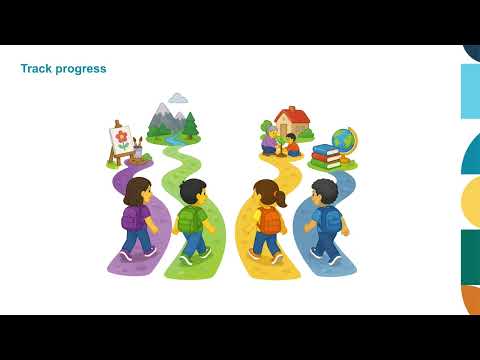
Access the Home education – how to develop an education program video transcript.
Use references and resources
Home education programs do not need to follow the curriculum structure. You have flexibility in how you plan, deliver and document your child’s learning.
When you develop your child’s education program, you may choose to refer to the Western Australian Curriculum and Assessment Outline developed by the School Curriculum and Standards Authority (SCSA). The 8 learning areas of the Western Australian Curriculum can be a useful reference when planning, organising and discussing your child's learning.
If appropriate, you may also use the ABLEWA – Abilities Based Learning Education program. The program provides support for the teaching and learning of students with disability and additional needs who are unable to access the Primary to Year 10 curriculum.
Resources are available for Pre-primary to Year 12 students on the School Curriculum and Standards Authority (SCSA) website. You can contact SCSA and provide proof of your home education registration to request a login to the site.
You may also refer to our home education resources and support.
Home education program examples
You can use the following education program examples to guide you when developing your child’s learning program.
- Education program example 1 – goal based
- Education program example 2 – general
- Education program example 3 – traditional 11 and 12
- Education program example 4 – topic based
- Education program example 5 – curriculum focused
- Education program example 6 – home educator example
The examples that follow have been shared by home educators. They show different ways you can develop an education program for children with special educational needs.
- Education program example 7 – child with autism
- Education program example 8 – self-directed learner with pathological demand avoidance
- Education program example 9 – neurodivergent learner recovering from school burnout
You may also include materials from other sources. Find home education learning resources and support.
Find related information
You can also refer to:
- Education program approaches to find examples that outline a range of possible approaches that your program may follow
- Your child's progress to understand your child's progress and how progress may be demonstrated in different circumstances
- Examples of progress to understand how you can collect examples of progress that show what your child has been learning and how their skills are developing over time.