17 March 2026
More than 60 students start their day at Gibbs Street Primary School with a free breakfast, a game of handball and some quiet reading time before the school bell even rings.
Students can read with an adult, play some handball rounds with friends and then head to the canteen counter for some breakfast before classes begin.
The School Breakfast Program typically attracts between 60 and 80 students each morning at Gibbs Street, where staff and volunteers help to prepare and serve the food.
Education assistant and one of the staff members that helps to prepare the daily meals, Sarah Campbell, said the program has become an important part of the school community.
"You get this connection with the kids and you see them every morning and it’s really nice," said Ms Campbell.
"It’s a tough job cooking for so many, but it’s very rewarding."
More than 640 schools in Western Australia are now participating in the School Breakfast Program, which has been delivered since 2001, with 533 having signed up for the expanded program to date.
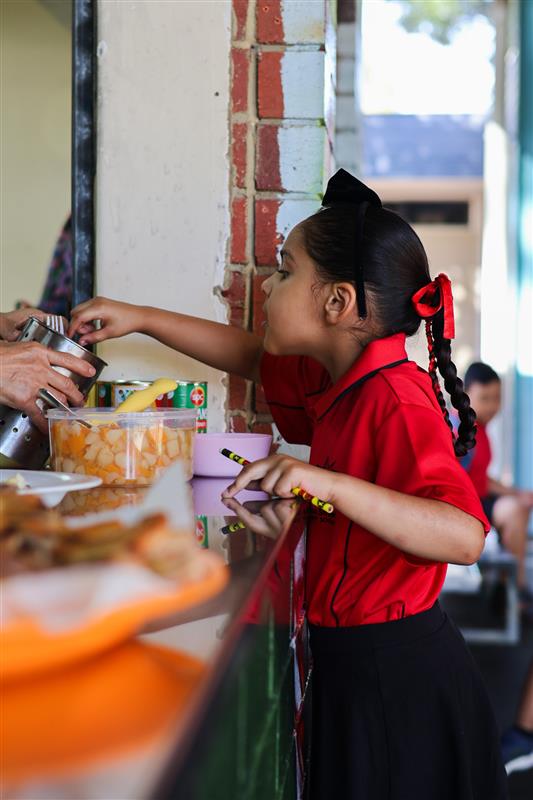
Gibbs Street Primary School student gets ready to dig into breakfast.
While scrambled eggs, beans, tinned spaghetti and fruit are on the menu at Gibbs Street Primary School, an Aussie classic remains a morning favourite.
"Vegemite toast is probably the most popular," Ms Campbell said.
"But the kids enjoy coming in, having something to eat and catching up with their friends before class."
The program is open to all students and is designed to create a welcoming and supportive environment at the start of the day.
Principal Julie Fendrich said linking the breakfast program with reading time and physical activity helped encourage greater participation.
“It gets them off to a good start to the day,” Mrs Fendrich said.
“They’ve got a full stomach, they’ve had an opportunity to socialise with their friends, and it’s a positive welcome to the morning.”
The breakfast program at Gibbs Street Primary School receives support from Foodbank WA, but also utilises their own produce via their chicken coop and a vegetable garden.
“We have quite a few veggie patches around the school and some chickens,” said Mrs Fendrich.
“It’s a great way to have a diverse range of food options.”