30 March 2026
The mussels of Mandurah are acting as the 'canaries in the coal mine' for local waterways through an innovative project involving John Tonkin College students.
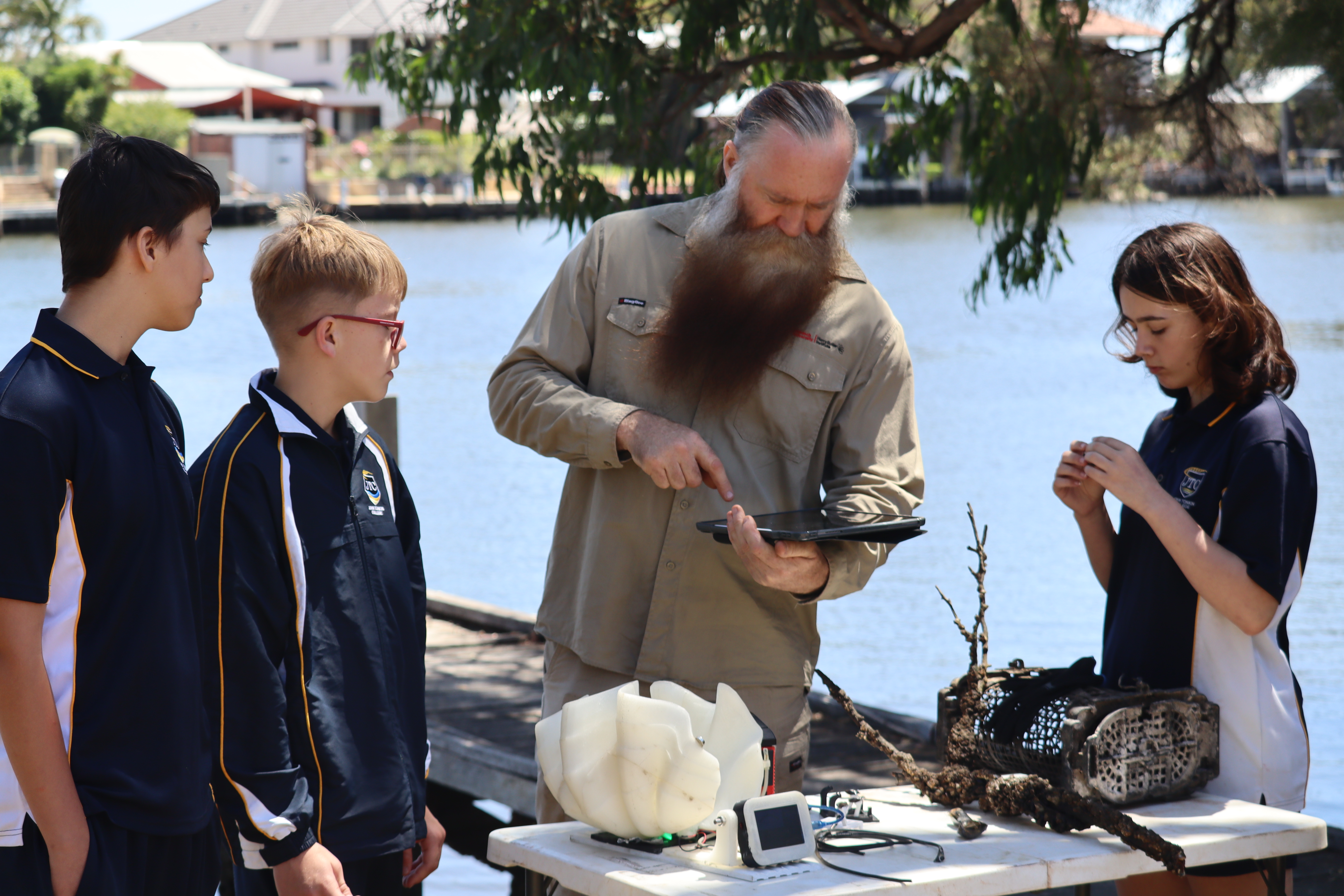
John Tonkin College students receive instructions from Dr Alan Cottingham, who runs the mussel monitoring project in the Peel region.
A cohort of students from Years 8 and 9 participate in Murdoch University’s Cybernetic Water Monitoring Project, which measures waterway health by analysing the behaviour of mussels at underwater research stations throughout the Peel region.
Each station features eight mussels, each equipped with sensors that transmit live data indicating how open its shell is.
Mussels close their shell when they are stressed, which can be an indicator of poor water quality.
The data collected is aimed at developing an early warning system to detect and respond to environmental issues, such as algal blooms, and understanding the reason for mass fish kills in waterways.
Emma-Louise Moore, head of science at John Tonkin College in Mandurah, said the project provides a tangible link between what students learn in the classroom and the health of waterways in their community.
“The mussel monitoring program really does bring science to life for our students,” Ms Moore said.
“There’s a shift that happens when students realise they aren’t just completing a task for a grade but contributing to understanding and protecting the Peel region.”
The monitoring project draws on data from multiple mussel stations in the Mandurah Marina and Murray River, as well as sites in Serpentine River, Harvey and Waroona.
Ms Moore said the school’s long-standing relationship with Murdoch University and Dr Alan Cottingham, the aquatic scientist who runs the mussel monitoring project, has deepened the learning opportunities for students in the Peel region.
“Our students are strongly connected to our local waterways,” she said.
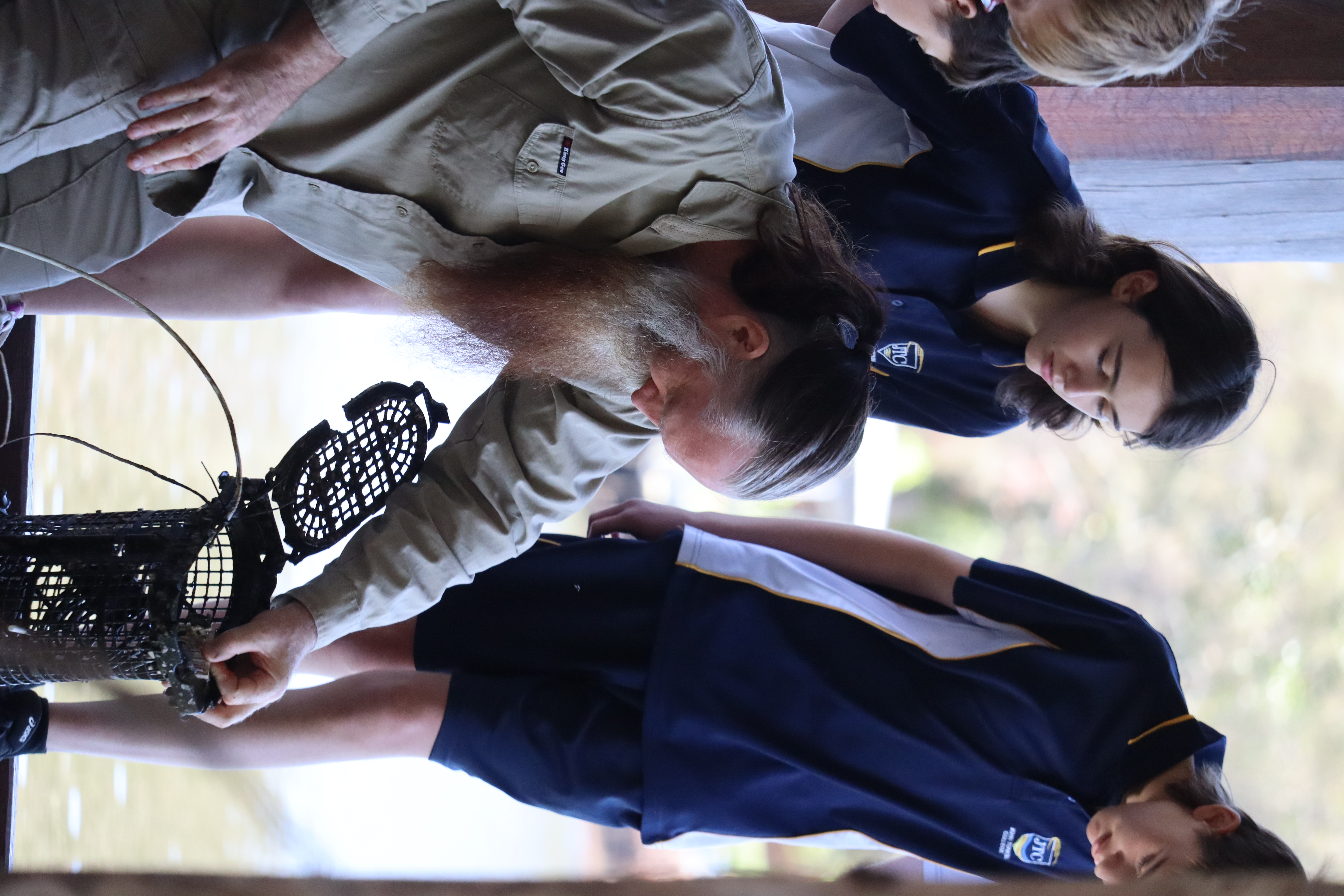
Murdoch University aquatic scientist Dr Alan Cottingham inspects a mussel monitoring station.
“Many spend their weekends fishing, kayaking or swimming in the estuary, and they understand how important these ecosystems are to their future.
“This program builds on that connection and helps them see how science plays a role in protecting what they value.
“Instead of just reading about water quality in the field, students are standing at the water’s edge collecting samples, discussing patterns, noticing changes and asking real questions about what their data means.”
The mussel project is part of John Tonkin College’s Ocean Science elective, which is offered to students through Years 7 to Year 10.
In Years 8 and 9, students develop skills in ecosystem dynamics, water quality testing and scientific inquiry, making the mussel monitoring project a perfect fit for the curriculum.
“Our students are already fortunate to experience a lot of hands-on learning through our aquaculture facilities,” Ms Moore said.
“They are used to working with live systems, testing water, monitoring changes and understanding how delicate balance in an ecosystem can be.
“The mussel program builds beautifully on that foundation, but it takes it one step further, beyond our school gates and into the Peel waterways they know and care about.”
Seeing the dedication of the students taking part in the mussel monitoring project was particularly fulfilling for Ms Moore.
“Watching them work together in the field, carefully handling equipment, debating their findings and slowly recognising that they are part of real environmental research is something special,” she said.
“As a teacher, that’s incredibly powerful to witness.
“Seeing their pride when they understand that science can make a genuine difference in their own backyard, that’s what makes programs like this so worthwhile.”
More information about the mussel monitoring project can be found on the Murdoch University website.