21 October 2026
Staff at O'Connor Education Support Centre are improving learning for students with Cerebral Visual Impairment (CVI) by adapting learning environments and teaching practices.
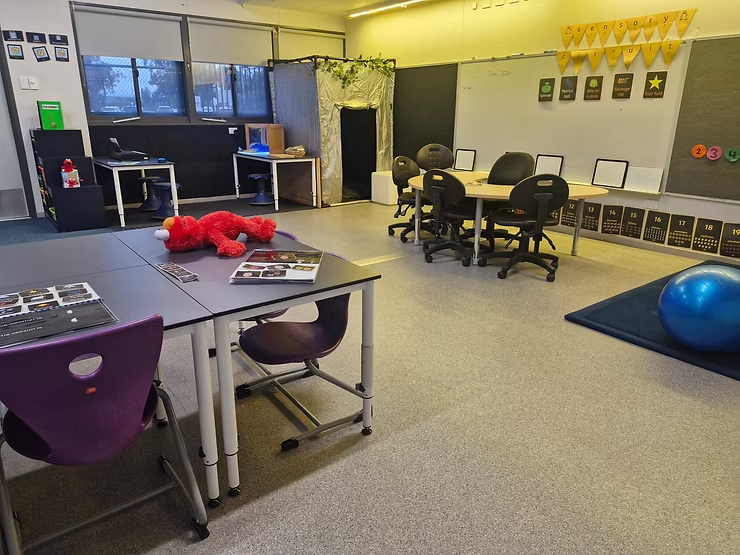
The classroom design encourages engagement and participation.
Using the Austin Assessment, a screening tool developed by the Austin McDowell Foundation, staff are gaining new insights into student behaviour and engagement. The card-matching activity explores how children respond to increasing visual complexity, supporting a more informed approach to inclusive education.
The tool measures accuracy and response time and can also track eye movements on compatible devices.
The assessment does not diagnose CVI, however it can help identify children who may benefit from further investigation or support from appropriate vision services, such as Vision Australia.
The results also inform classroom adaptations that may improve access to learning.
It has already made a tremendous impact at O'Connor Education Support Centre.
Wendy Dingwall, acting deputy principal and child development lead teacher, said learning environments at the school have been redesigned to reduce visual complexity and improve accessibility, which has led to increased engagement and participation for students with CVI.
The changes include:
- reducing unnecessary visual clutter
- creating visually quieter areas
- using plain backgrounds and clearer contrast
- increasing the spacing between objects, symbols and learning materials
- reducing glare and reflections
- adjusting lighting
- presenting fewer items at one time
- allowing children additional time to look and respond.
“Since [the classroom redesign], students have generally presented as calmer and more focused,” said Mrs Dingwall.
“Parents and carers have been very understanding and supportive.
“These conversations also provide an opportunity to build awareness of CVI and explain how visual clutter can affect a child’s ability to locate, recognise and interpret what they see.”
Staff are incorporating CVI-friendly approaches into their everyday classroom practice and many of the changes may also benefit neurodivergent learners, autistic children and students with ADHD.
Mrs Dingwall first became aware of CVI while working as a special needs teacher in the UK.
When she moved to Perth, she saw an opportunity to build greater awareness of the impairment. After connecting with the Austin McDowell Foundation through ongoing professional development, Mrs Dingwall was inspired to develop staff expertise at O'Connor Education Support Centre.
The school has now been showcased by the foundation in its international Empower series, a community-focused initiative that shares real-life journeys and experiences from the CVI community.
“The Austin McDowell Foundation has been very supportive of our work,” said Mrs Dingwall.
“This recognition has been very encouraging and has helped affirm the direction of our work”.
There is now greater collaboration with families and external specialists. The assessment has also prompted valuable professional conversations among staff, who have improved their knowledge and confidence in identifying needs.
The success in improving outcomes for students with complex learning needs has encouraged leaders at O'Connor Education Support Centre to share expertise with other schools across Western Australia, too.
To learn more about the foundation’s assessment tool, education resources and advocacy efforts, and to read the O'Connor Education Support Centre case study, refer to the Austin McDowell Foundation website.