18 September 2025
Kambalda West District High School’s Year 3 students rolled up their sleeves and got their hands dirty during a special visit to the Museum of the Goldfields Aboriginal Bush Food and Medicine Garden.
The 24 students and their teachers swapped the classrooms for garden beds, planting 54 new native species, including karkurla, emu bush, maroon bush and the goldfields bottlebrush.

Year 3 students from Kambalda West District High School digging in to Museum of the Goldfields Aboriginal Bush Food and Medicine Garden. Image credit: Chuck Taylor
The students’ efforts added more colour and life to the expanding space.
Principal Tara Schmidt said the excursion was a meaningful way for students to link classroom learning with the world outside.
“Our students were able to make real-life connections between two-way science, language and culture, while engaging with our local community,” Ms Schmidt said.
The Year 3 students were the first to test drive the garden’s new education program.
With guidance from Goldfields Aboriginal Community Services rangers and Gold Fields staff, students explored six plants of special significance to the region. They touched, smelled and tasted the plants, learning about their traditional uses for food, medicine and cultural practices.
Western Australian Museum Regional Manager Kirsty Brooks said the program was designed to connect students to Country and deepen their respect for Aboriginal knowledge systems.
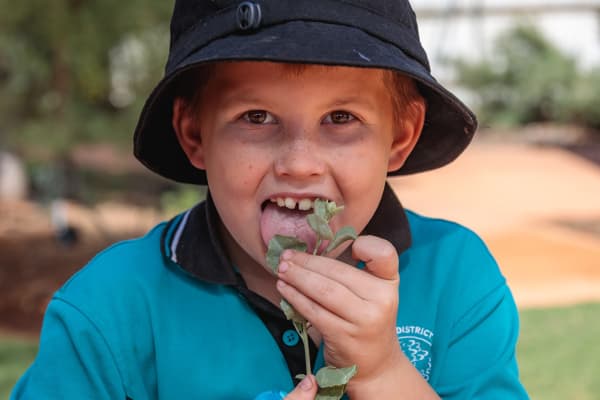
Kambalda West District High School student tasting the bush food. Image credit: Chuck Taylor
“Our Bush Food and Medicine Garden program immerses students in cultural learning, hands-on exploration and sustainable practices,” Ms Brooks said.
“It’s about fostering intercultural understanding and environmental responsibility.”
To take part in the program contact the Museum of the Goldfields.